

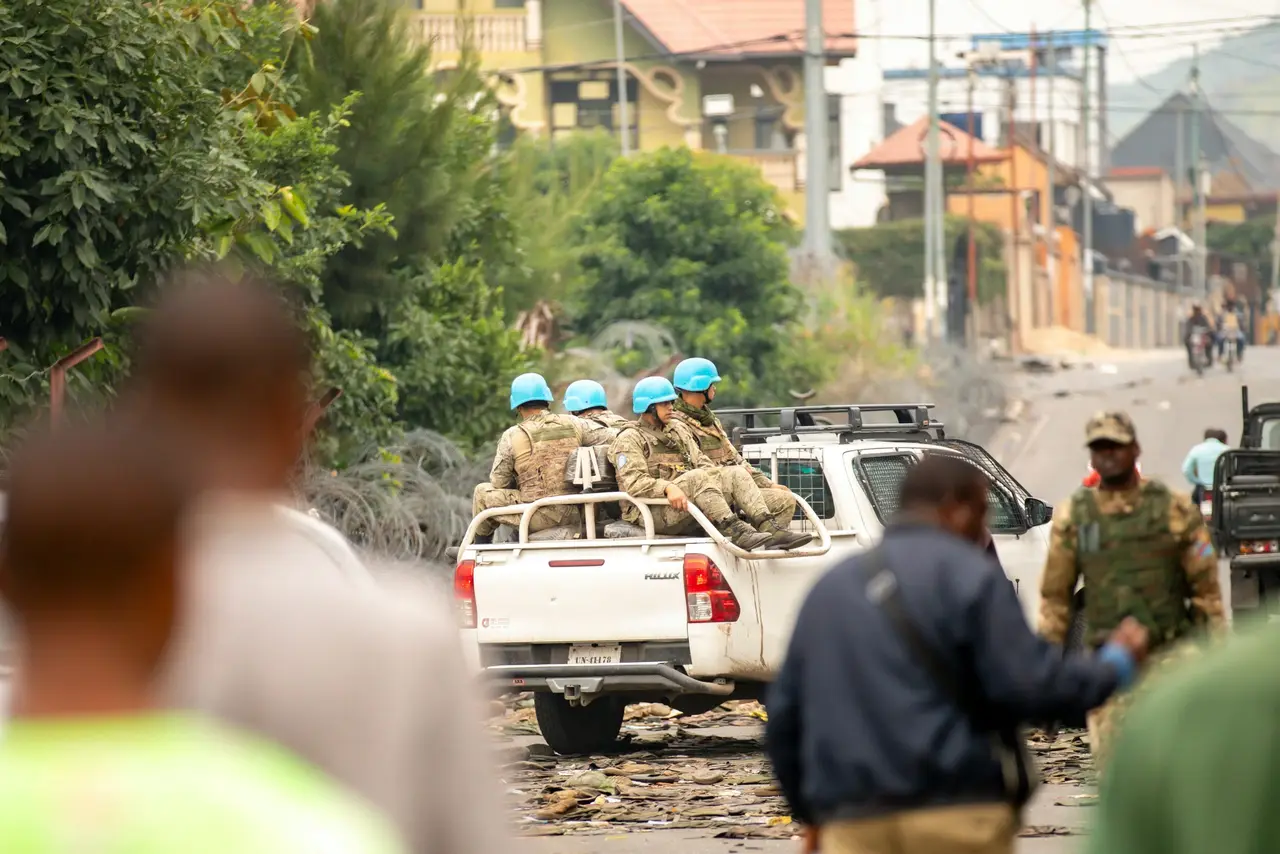
When mediation is perceived as a vehicle for asymmetric power projection, it becomes unpredictable and unattractive for conflict parties.
The erosion of the concept of “mediation” in international politics is not a merely semantic problem. It reflects a deeper political shift. Where mediation is increasingly practised and justified as power-based deal diplomacy—the pursuit of strategic interests through pressure, threats, or imposed concessions—it loses its normative core. This development became particularly visible in the foreign policy of the Trump administration, which openly framed “peace-making” as an instrument of transactional advantage. Such an approach does not merely misuse mediation; it fundamentally distorts it. The damage extends beyond individual cases, undermining the political credibility of mediation as an instrument of conflict transformation.
In its substantive sense, peace mediation refers to the support of conflict parties in negotiating political solutions under their own responsibility, facilitated by a third party. It often begins long before formal negotiations, through discreet contacts, the opening of communication channels, and the careful exploration of possible formats for dialogue. It extends from structuring complex negotiation processes to accompanying sensitive implementation and reform phases following political agreements. Its instruments range from facilitative support and process advice to the provision of technical expertise—always process-oriented, never substitutive.
Peace mediation is not a neutral technique. It is a political practice in its own right. Its legitimacy does not derive from power, but from recognition. It rests on the acceptance of its role by the conflict parties, the protection of confidential communication spaces, and the capacity to manage asymmetric interests in ways that preserve political ownership. Where the projection of power is disguised as mediation and serves concealed self-interest, mediation loses its central purpose: enabling a shift from confrontation to cooperative problem-solving. While targeted pressure may occasionally help overcome stalemates, once pressure replaces process, it generates dependency, resistance, and political pseudo-solutions. The fragile and often short-lived outcomes of power-driven peace initiatives over the past decade offer ample evidence of this dynamic.
Political Preconditions and Structural Ambivalences
Mediation presupposes political conditions that it cannot create itself. In early phases of peace processes, mediation is often informal. Contacts are explored, channels tested, and red lines cautiously probed. This phase requires discretion, flexibility, and a willingness to move beyond formal positions. Especially in highly polarized or fragmented conflicts, it is here that the possibility of a transition from violence to dialogue is first assessed.
At the same time, mediation depends on political recognition of its role. Mandates may originate from conflict parties, international organizations, or hybrid arrangements; their formal source matters less than their political acceptance. Where such recognition is absent or ambiguous, mediation is easily perceived as covert intervention. In such contexts, even methodologically sound mediation may be interpreted as manipulation.
Across all phases of a peace process, mediation can play a supportive role—accompanying transitions, clarifying contested interpretations, or facilitating guarantees by third parties. Its political limit is reached, however, when it begins to replace responsibility rather than enable it. Mediation that anticipates outcomes undermines the very foundation on which it rests.
Mediation is inherently selective. It primarily engages actors who hold, or are likely to acquire, decision-making and veto power. This selectivity is politically unavoidable, yet normatively problematic. An overly narrow focus on political or military elites risks eroding legitimacy; an excessive expansion of participation formats may obstruct negotiations or depoliticize them. Balancing effectiveness and inclusion is therefore not a technical challenge, but a political judgement.
Mediation becomes particularly problematic when third parties pursue their own economic or geopolitical interests. In such cases, the boundary between mediation and intervention blurs. Trust erodes, and mediation loses its function as a protected space for autonomous compromise-building.
Trust, Confidentiality, and Power Asymmetries
Confidentiality is not a procedural detail but a political precondition of effective mediation. It enables conflict parties to reconsider positions, test options, and introduce flexibility without immediate domestic or reputational costs. When this protective function is breached—through leaks, media exposure, or strategic instrumentalization—room for manoeuvre contracts, and mediation loses its exploratory character.
In contemporary practice, confidentiality is under increasing pressure. Mediation processes operate in a tension between legitimate demands for transparency and the necessity of protected communication. This tension becomes particularly acute when mediators are themselves powerful political actors. Information obtained in confidential settings may then—deliberately or inadvertently—feed into broader strategic positioning. Even the perception of such use can irreversibly damage trust.
Trust, therefore, is not a matter of individual integrity alone. It is the product of political and institutional conditions. It requires clear role separation, credible safeguards, and a willingness to forego short-term political gains in favour of long-term process stability. Where these conditions are absent, mediation risks degenerating into symbolic accompaniment of power politics rather than a meaningful political process.
Role Clarity Versus Political Control
Peace mediation is conceived as assistance to self-help. Its purpose is to enable communication and decision-making without relieving conflict parties of political responsibility. This constitutes both its distinctive strength and its central institutional challenge. Mediation must allow proximity without capture and exert influence without assuming control.
Once third parties begin to dictate substance, impose timelines, or define outcomes, mediation turns into intervention. Apparent success under such conditions rests on external control rather than internal acceptance. Agreements reached in this manner are inherently fragile; they endure only as long as the intervening power remains willing and able to enforce them.
The authority of mediators derives from legitimacy, not coercion. When power is used to impose preferred outcomes, mediation loses its normative foundation. International organizations and states face a structural dilemma in this regard: while they possess substantial power resources, they must strictly separate these from their mediating role if mediation is to remain credible. Sustainable peace does not emerge from externally imposed solutions, but from the gradual assumption of political responsibility by the conflict parties themselves.
Effectiveness, Illusions, and Political Responsibility
Peace mediation rarely produces spectacular breakthroughs. Its contribution lies in the gradual transformation of political conditions: preparing actors for negotiation, clarifying interests, reducing misperceptions, and opening realistic decision-making spaces. This work is incremental, time-consuming, and politically difficult to communicate—but indispensable.
The growing institutionalization of mediation has enhanced professionalism and availability, but it has also fostered problematic expectations. Mediation is increasingly treated as a controllable instrument expected to deliver predictable results. This technocratic illusion misreads the political nature of violent conflict. Where mediation is embedded in rigid timelines or political success narratives, its effectiveness diminishes.
Mediation can support political processes, but it cannot substitute for them. Structural drivers of conflict—such as social inequality, territorial arrangements, security governance, or economic power distribution—require political decisions and long-term institutional change. Mediation may open spaces and accompany transitions; it cannot replace politics itself.
Conclusion: Drawing Normative Boundaries
Peace mediation is not a panacea. Its effectiveness depends on political conditions beyond its control. Precisely for this reason, clear normative boundaries are essential. Where mediation is employed as a limited, process-oriented, and politically sensitive instrument, it can make a substantive contribution to the transformation of violent conflict. Where it is instrumentalized as a tool of power, symbolic politics, or the avoidance of political responsibility, it not only fails—it undermines the future credibility of mediation as such.

