
Youth voices matter most when they turn empathy into dialogue and build bridges across cultures.
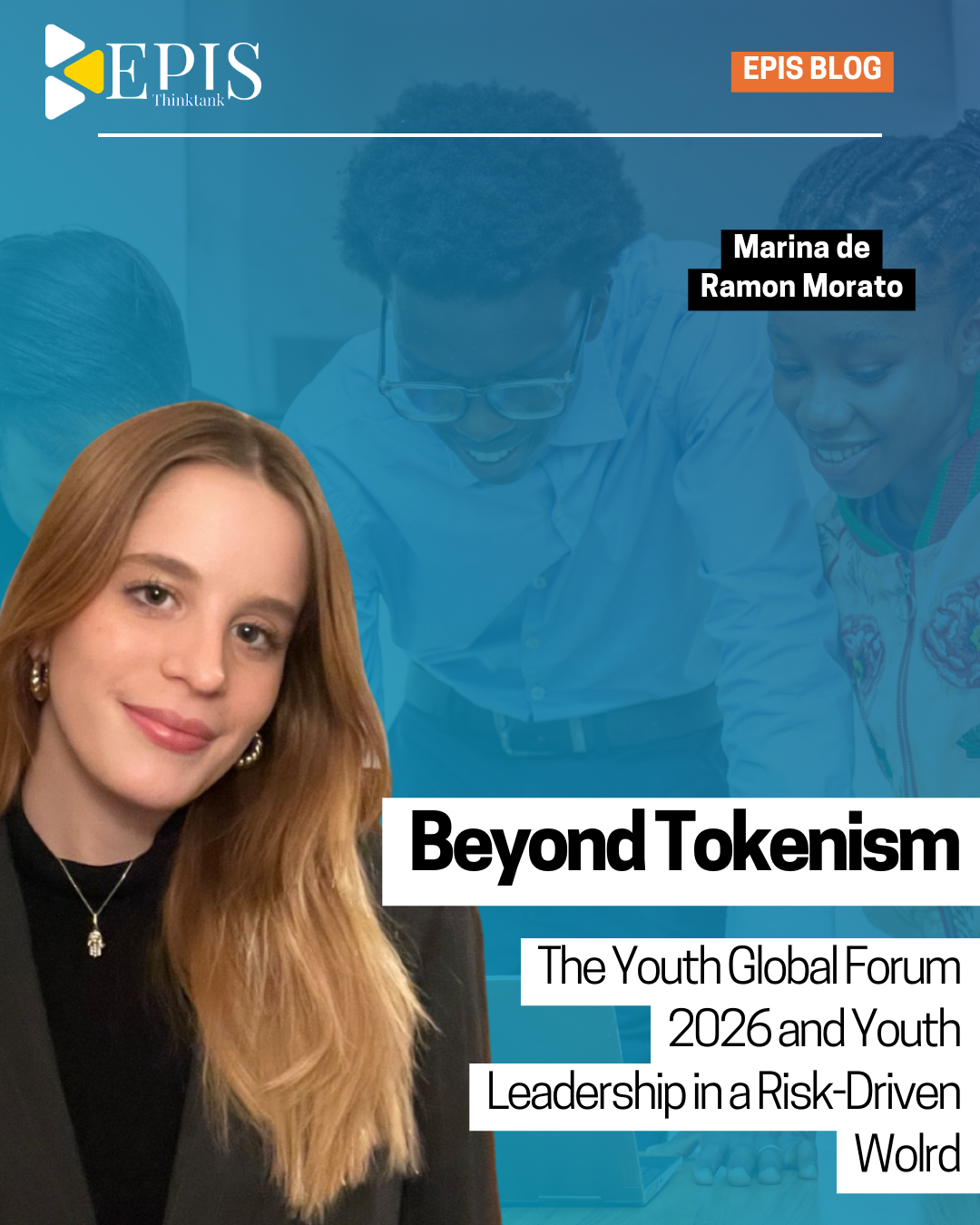
Beyond Tokenism: The Youth Global Forum 2026 and Youth Leadership in a Risk-Driven World
The Youth Global Forum 2026 brought together young leaders and professionals from diverse backgrounds to reflect on the evolving role of youth in a rapidly changing global environment. Across the conference, discussions consistently emphasized responsibility, resilience and the need for youth to move from symbolic participation to meaningful influence in decision-making processes. Three sessions were particularly impactful in shaping these reflections.
Digital security and risk awareness
One of the most insightful sessions was Digital Security and Risk Awareness for Emerging Leaders, led by Roberto Sanchez Vilariño. The discussion focused on global megatrends shaping the risk environment, from accelerating digitalisation to geopolitical instability and the widespread deployment of AI. A key takeaway was the identification of emerging threats expected to dominate in 2026, notably AI-driven cyber risks and systemic vulnerabilities. The concept of skill atrophy was particularly striking: as organisations increasingly rely on AI systems, human expertise risks deteriorating, creating what Vilariño described as “AI-induced operational fragility”. The session challenged traditional definitions of risk, encouraging future leaders to see risk not only as exposure to threats but also as a dynamic framework requiring adaptability, continuous learning and strategic judgment.
Mental resilience for effective leadership
Another session explored the evolution of the role of youth in decision-making, with a strong emphasis on moving beyond tokenism. Speakers argued that youth participation must be structural rather than symbolic, granting young people real influence rather than advisory roles without impact. The discussion also addressed the growing mental health challenges faced by young leaders, linking mental resilience directly to leadership effectiveness. In high-pressure policy and institutional environments, resilience was presented not as an individual responsibility alone, but as something that must be supported through mentorship, inclusive cultures, and open conversations around mental health.
Healthcare geopolitics and policy adaptations
A final highlight was the session on building a career in healthcare public affairs, which offered a practical and strategic perspective on advocacy and policy influence. Healthcare Official Fabrizio Checchia outlined how careers in public affairs combine technical knowledge, communication skills and ethical responsibility. The concept of the Overton Window was particularly relevant, illustrating how policy change often depends on gradually shifting what is considered politically acceptable. Rather than viewing lobbying as inherently negative, the session framed ethical advocacy as a legitimate and necessary tool to improve healthcare systems, expand access and align public policy with scientific evidence and societal needs.
Youth statements: Where our voices were heard
A particularly meaningful aspect of the Forum was the space given to personal youth statements. These interventions allowed participants to articulate their own perspectives and experiences, reinforcing the idea that youth voices are not interchangeable but deeply shaped by cultural and personal contexts. My own statement, which focused on the importance of bridging cultural gaps, illustrated my research on cultural diplomacy and the importance of not inheriting the misunderstandings of the past, but rather learning about the other to overcome fear and suspicion.
Concluding thoughts
Overall, the Youth Global Forum 2026 was as much about human connection as it was about policy and leadership. High-level discussions were complemented by informal conversations, shared moments of laughter and genuine curiosity about others’ experiences. The Forum reinforced the idea that global challenges are better addressed not only through expertise, but through dialogue and empathy, combined with the ability of young people to build bridges between disciplines, institutions and cultures. I wholeheartedly recommend it to all EPIS Fellows and Network members.
Documents: 📄 Full Publication (PDF) 📂 Source Document