LATEST NEWS

EPIS Format Groups
Blog
Weekly perspectives on current topics
The Format Groups Blog – A weekly series of opinionated briefs (500-1000 words) discussing current issues in foreign affairs and security policy. Topics range from geopolitical analysis and international conflict to diplomatic strategies and global governance. The format presents well-researched, succinct insights to engage both academic and general audiences in timely security policy discussions.
What is Nihilistic Violent Extremism?
Root causes, response options and challenges of online extremism
-What is NVE? How is it linked to terrorism, and how can it be countered?
NVE is a form of violence driven not by ideology but by hatred toward society and misanthropic worldviews. Often targeting minors, some groups or subgroups may engage in terrorism. Responses to NVE include youth education and reporting encouragement or global investigative cooperation measures.
-While these responses are crucial in fighting NVE, the legal, structural, and cooperative challenges remain major obstacles.

PDSF 2026
Sovereignty in an Age of Disruption
Main question: How can sovereignty be protected in a volatile, disrupted world?
Argument: Power now depends on resilience, partnerships, chokepoints, and institutions able to challenge their own assumptions.
Conclusion: Sovereignty today cannot mean isolation; it requires strong alliances, diversified dependencies, diplomacy, and honest debate.
Patriotism and Policy-Making in China
Unity in a Fragmented World
How does patriotism influence China’s policy-making in a fragmented global order?
Patriotism acts as a source of national cohesion that supports long-term policies, especially in technological self-reliance.
While effective for coordination, this model raises questions about debate, flexibility, and global implications.
Meloni-Trump
The Cracks in Modern Atlanticism
Main question: What elements led to the breakdown of the Meloni-Trump partnership and what are the risks for Italy's Atlanticist vision?
Argument: The crisis stemmed from Italy denying the use of Sigonella airbase for Iranian operations and Trump’s harsh attacks on Pope Leo XIV, which Meloni declared unacceptable
Conclusion: Geopolitical reality and core cultural values have overtaken personal ties, shifting the paradigm from allies to tools in Trump’s "America First" vision
War in the Dark
How Russian military strikes on Ukrainian power plants affected lives of hundreds of civilians
1. Do Russian strikes on Ukrainian energy infrastructure violate international humanitarian law? 2. The attacks systematically targeted civilian infrastructure during extreme winter conditions, causing disproportionate civilian harm with no identifiable military necessity, in breach of the Geneva Conventions and Additional Protocol I. 3.The law is clear. What is missing is the political will to enforce it.
From Drone Strategy 2.0 To a Trusted EU Drone
Towards European Air Sovereignty?
Can the EU move from a strong civilian drone framework to achieving air sovereignty through a more security- and defence-oriented drone strategy, and how should it do so without fragmentation?
Major structural gaps remain, while increasing securitisation risks undermine innovation and market growth.
Achieving true European air sovereignty will depend on closing capability gaps, reducing dependencies, and ensuring coordinated, non-fragmented development, balancing security with innovation.
Beyond Succession
What Kim Ju-ae reveals about North Korea’s strategic confidence and dynastic continuity
Main question: Do Kim Ju-ae’s appearances signal succession, or something broader about regime strategy?
Argument: Her visibility is less about naming a successor than projecting dynastic continuity, strategic confidence, and strengthened legitimacy amid growing military power and ties with Russia/China.
Conclusion: This signals a more self-assured North Korea, potentially reducing incentives for diplomatic engagement.
European Economic Sanctions against Russia
An Ethical Analysis
In the world of international diplomacy, sanctions have emerged as the weapon of choice for nations seeking to punish, pressure, or paralyze their adversaries. This article briefly summarizes the ethical background of economic sanctions, viewed as a punitive tool of statecraft. Building on insights from the field of applied ethics, it explores the moral and logical justification of European economic sanctions against Russia after its 2022 invasion of Ukraine.
Taiwan’s Big Brother
China, or the United States?
Main question: Does Taiwan prefer partnership with the U.S. or China?
Argument: Shifting opinions and geopolitics in East Asia affect Taiwan's confidence and trust with the U.S.
Conclusion: Taiwan still prefers U.S. partnership due to their decades' long relationship.
High North and "La Dolcevita"
Lessons from the Arctic Circle Rome Forum
The 2026 Italian Arctic Policy responds to the end of Arctic exceptionalism by defining Italy as a "Near-Arctic State". Through the concept of "teleconnections," Italy links Arctic stability to Mediterranean security. It employs science diplomacy and the Navy’s "High North" operation to protect interests. Despite Russia's isolation, Italy views functional dialogue as a "creative necessity" to prevent regional chaos.
Funding Freeze
An Implicit and Yet Explicit Meaning
Executive Order: “Reevaluating and Realigning United States Foreign Aid”; who could oppose the need to eliminate abuses of the system? Domestically, the freeze on spending carries tangible risks for essential social programmes, threatening services that many communities rely on. Internationally, it also fuels uncertainty: allies and partners are left wondering whether the country will remain a dependable security provider and consistent strategic partner in the years ahead.
Strait of Hormuz
EU’s Next Challenge towards (Energy) Autonomy
This essay aims to highlight the impact of the current blockade of the Strait of Hormuz on the EU, how it is managing, relatively, the crisis effectively, and what this entails for its strategic (energy) autonomy plans.
The EU's Next Multiannual Financial Framework
Space and Defence Perspectives from Brussels
- Competitiveness in the next MFF
- Spaceshield and new Space capabilities
- The defense-industrial dimension of DG DEFIS
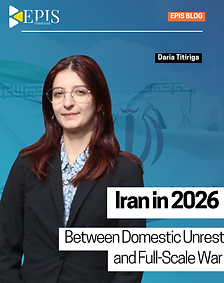
Iran in 2026
Between Domestic Unrest and Full-Scale War
Main question: progress of doemtic unrest and war in Iran
Arguemnts: domestic unrest less important for Iran compared to War
Conclusion: situation needs to be observed as it progresses
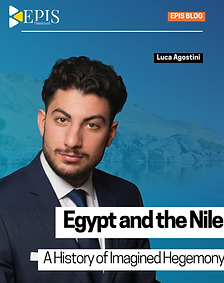
Egypt and the Nile
A History of Imagined Hegemony
-Egypt has enjoyed a normative hegemony over the Nile's waters since the period of British colonialism.
-As riparian basin states seek to develop their hydrological development potential, this clashes with Egypts previously privileged position, especially regarding Ethiopia's construction of the GERD dam project.
-Increased water scarcity will lead to future inter-state conflict over shared watercourses if no sustainable governance mechanism can be established.

European Union–India Agreement
Redefining Global Commerce
How a large-scale trade deal will reshape global commerce?
Reducing tariffs and expanding cooperation in goods, services, and mobility will strengthen market access and economic integration.
Success depends on ratification and effective handling of regulatory, environmental, and sector-specific concerns.

Middle East Maritime Security & Geostrategy
Analyzing the Red Sea confrontation and the strategic boundaries of international intervention
Can conventional military deterrence and naval coalitions effectively neutralize asymmetric threats from non-state actors in fractured states like Yemen?
While the U.S. prioritizes trade stability and Israel enforces direct deterrence, these kinetic responses address maritime symptoms rather than the underlying political fragmentation.
Lasting Red Sea security requires political stabilization; military force alone cannot resolve a crisis rooted in regional governance failure.

Was WEF26 Truly Equipped to Address Peace?
Greenland as the Ultimate Stress Test for Global Governance
Was WEF26 equipped to address peace given the complex geopolitical structures and tension around Greenland?
WEF26 was effective in terms of dialogue and de-escalation, but structurally not capable of enforcing and ensuring peace
Davos can be a tool to talk about peace, but it can't guarantee it.

Europe’s Cupboard For War
Why The EU’s Critical Raw Materials Push Matters For Defence
- Why The EU’s Critical Raw Materials Push Matters For Defence
- The EU’s CRM policy should be viewed as a defence issue, and not just an environmental or industrial one.
- Europe is making progress, with a shift in mindset, but is still lagging in many sectors.
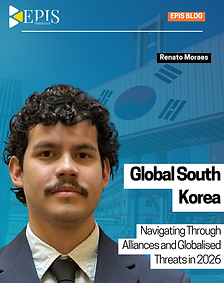
Global South Korea
Navigating Through Alliances and Globalised Threats in 2026
Main question: How does South Korea navigate through the current geopolitical landscape?
Argument: Considering the fact that the country has a new administration since June 2025, South Korea has been "reseting" and "recalibrating" current relations with major international actors in 2026.
Conclusion: South Korea must find a balance in managing its alignment with Western countries and international organisations, while maintaining its relevance in the Indo-Pacific region.