
Perceived as a direct threat to regional stability, Russia's aggressive behaviour in the Baltic Sea region has reinforced NB8 unity.
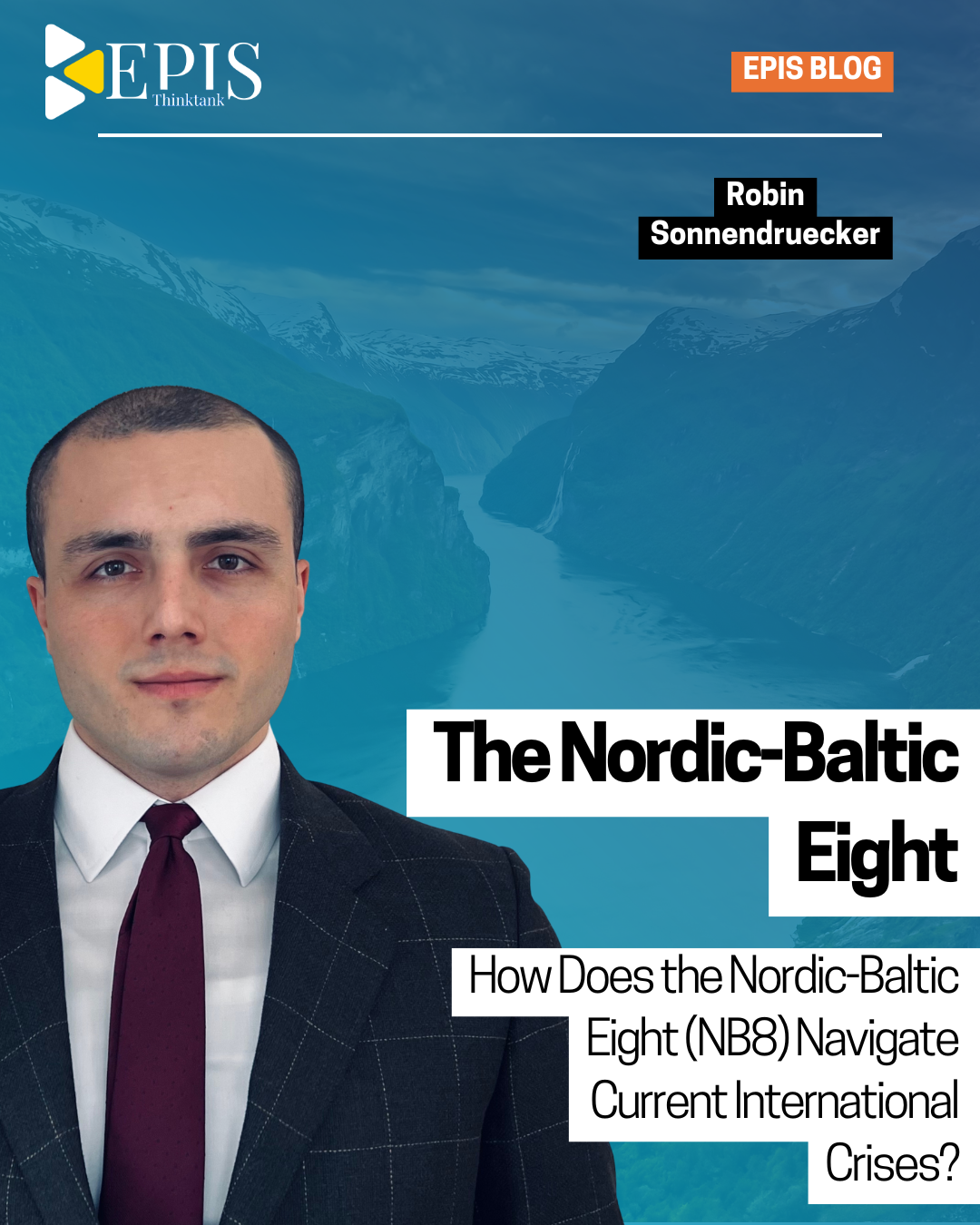
Nordic-Baltic Eight: How Does the Nordic-Baltic Eight (NB8) Navigate Current International Crises?
In the midst of resurgent great-power rivalry and transatlantic strains, the NB8 represents an informal grouping of small states that demonstrate surprising cohesion, resilience, and flexibility. Comprising the five Nordic countries (Denmark, Finland, Iceland, Norway, Sweden) and the three Baltic states (Estonia, Latvia, Lithuania), this cooperation format is becoming an essential geopolitical actor.
This year, Estonia leads the NB8, having assumed the chairmanship on 1 January 2026. Tallinn’s top priorities will centre on deepening partnerships and strengthening coordination among members.
Whether on defence or economic matters, the Nordics-Baltic bloc represents a deeply integrated regional group. From the war in Ukraine to the Greenland crisis, understanding the NB8 has never been more crucial for political analysts and security experts.
The Ukraine war
Russia’s full-scale invasion of Ukraine in February 2022 triggered a sense of urgency across the NB8. The Soviet occupation of the Baltic states and conflictual relations with the Nordic countries during the Cold War prompted the bloc to adopt a strong defensive position vis-à-vis Russia. The support for Kyiv has therefore intensified throughout the four years of war.
As recently as 23 January 2026, NB8 foreign ministers issued a joint statement condemning Russia’s deliberate attacks on Ukraine’s critical energy infrastructure. Vocal and firm, such statements highlight the bloc’s solidarity against predatory actions.
The NB8 substantially leads European aid to Ukraine. All eight members signed long-term bilateral security agreements with Kyiv in 2024. For instance, Denmark has provided approximately €9.5 billion in military support. Lithuania and Latvia have also pledged to allocate 0.25% GDP per year for aid.
Whether coordinated or bilateral, these efforts reflect the political weight gained by the NB8 in Europe, while aligning with members’ respective geopolitical interests. The NB8’s global visibility has also been consolidated, and the bloc’s voice is heard in European security debates. Finland and Sweden’s NATO accessions further demonstrate shared security concerns in both the Baltic Sea region and the High North amid Russia’s hybrid threats.
The hybrid threats concern
Perceived as a direct threat to regional stability, Russia’s aggressive behaviour in the Baltic Sea region has reinforced NB8 unity. With Finland and Sweden now part of NATO, the regional security architecture is more coherent under a single integrated framework. The Alliance’s north-eastern flank is therefore bolstered.
Helsinki adds to NATO one of Europe’s largest and most powerful artillery forces (over 1,500 units), while Stockholm maintains a capable air force (around 100 combat aircraft) and navy (including four attack submarines).
The NB8 states also host advanced defence industries (Kongsberg, Patria, Saab). Joint initiatives such as the Common Armoured Vehicle System (CAVS) programme exemplify deepened industrial coordination among the Nordics, the Baltics, and Germany.
NATO’s mission Baltic Sentry – launched on 14 January 2025 to protect critical submarine infrastructures in the Baltic Sea – emphasises proactive resilience. It reinforces the Alliance’s deterrence strategy against Russia. These recent developments show that external threats accelerate NB8 integration, transforming security ties into a layered defence structure. However, the systemic transformation of the global order appears to be shaking transatlantic relations.
The Venezuela case and the Greenland crisis
US unilateralism in the Venezuela case and the Greenland crisis has disrupted enduring patterns of transatlantic cooperation. It has also raised concerns about potential breaches of international law, such as the principles of non-intervention and state sovereignty. The Nordic-Baltic bloc faces the need to adapt to this new reality while being pulled in two directions: its strategic dependence on the US for security and economic matters, and its commitment to the integrity of a rule-based international order.
The US military operation to arrest Nicolás Maduro and his wife, Cilia Flores, in Caracas on 3 January 2026 prompted cautious responses from the NB8. While the EU High Representative Kaja Kallas called for calm, speaking in the name of the EU member states (with the exception of Hungary), the NB8 did not issue any joint statement.
The Greenland crisis, nevertheless, sparked a collective response. Washington’s threats of tariffs and even the use of force to acquire the Arctic island directly challenged an NB8 member’s sovereignty – as well as that of a NATO ally. Denmark issued statements on 6 and 18 January – the first backed by all Nordics and second co-signed by Finland, France, Germany, the Netherlands, Norway, Sweden, and the UK, with Baltic prime ministers expressing support on social media. Symbolic military deployments, including personnel from Finland, Estonia, Norway, and Sweden, underscored solidarity by putting skin in the game.
Even though negotiations eventually reduced tensions around the Greenland crisis, the process has still damaged transatlantic trust. It has also exposed how much the NB8 countries rely on the US as a strategic anchor. At the same time, the Nordics and the Baltics showed that they can still speak out when their core interests are threatened, in this case, national sovereignty.
Cohesion, Flexibility, & Resilience
Because Russia links the Arctic, the Baltic Sea region, and the High North in its military planning, the NB8 should expect its cohesion to be challenged by Moscow. Here, the Nordic-Baltic bloc’s strength lies in its multi-layered integration, relying on NATO, the EU, and diverse economic and defence partnerships.
They should also expect Washington to scrutinise and test them separately, as it was the case with Denmark. For this reason, NB8 governments must find a good balance between accommodating US strategic concerns and carefully managing regional security – so that one does not come at the expense of the other. The region’s prosperity depends on it.
From demonstrating resolve against Russia to navigating US unilateralism, the NB8 format reveals strengths in flexibility. The shared set of values among members proves an asset when the rule-based order is eroding. Resilience therefore becomes the key feature of this informal format. Furthermore, what the group has strongly shown is its proactivity when needed. Leading Europe’s aid to Ukraine also indicates a clear commitment to solidarity.
Estonia’s 2026 chairmanship offers an opportunity for the NB8 to consolidate the platform, enhance its global visibility, and strengthen competitiveness. The recent NB8 meeting with the Weimar Triangle (France, Germany, Poland) in April 2025 signals growing importance, positioning the Nordic-Baltic bloc as a potential model for regional cooperation amid a fragmented world.
Documents: 📄 Full Publication (PDF) 📂 Source Document