
it is important not to let the pessimism overtake us, not to call defeat before the first blow has been struck
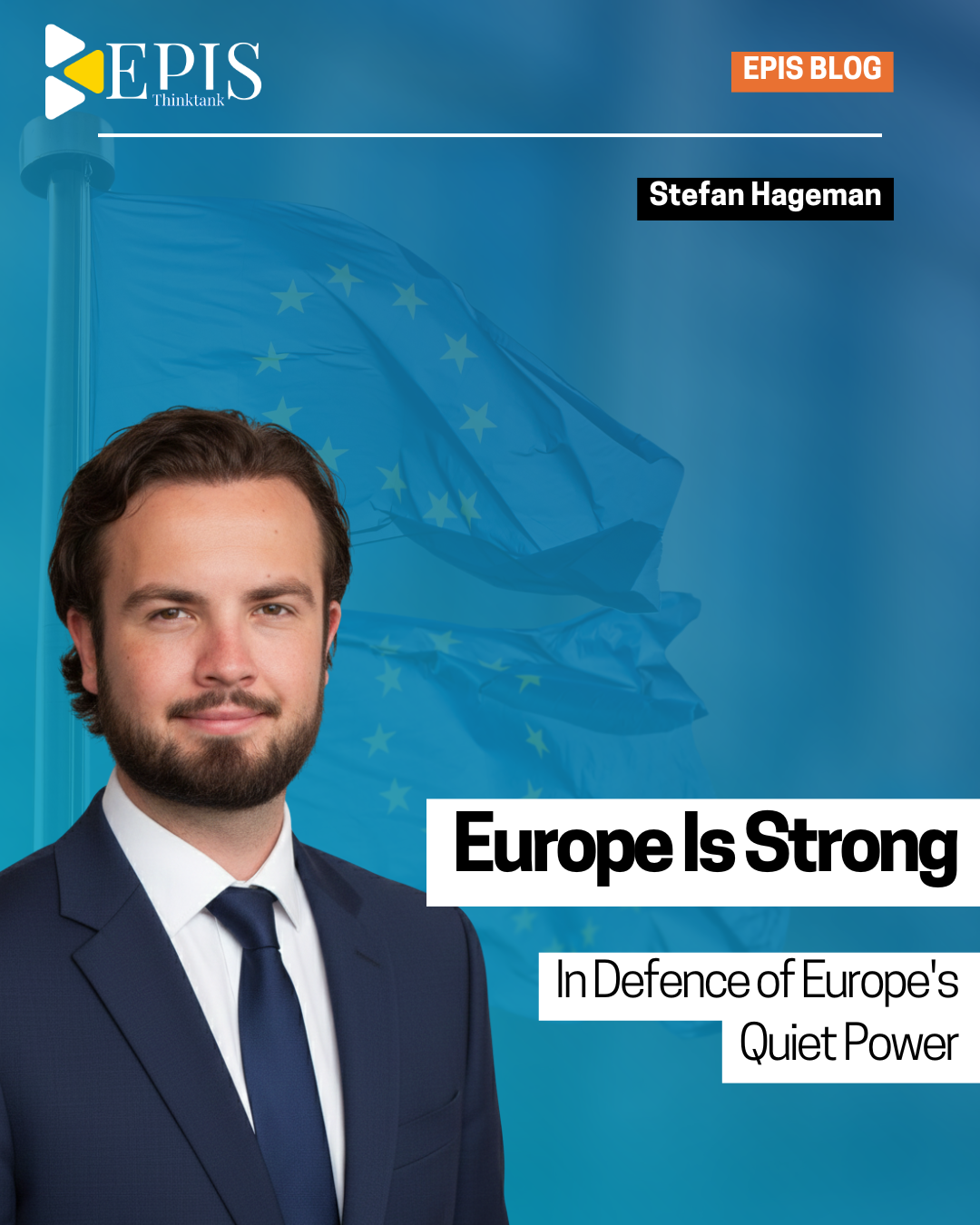
Europe Is Strong: In Defence of Europe’s Quiet Power
Lately, my newsfeed has been flooding with pessimistic messages on Europe’s state in the world. The erratic and illiberal behaviour of several major heads of state has awakened existential fear and dread in many of my colleagues. While it is good to reflect critically on our position in the world, and look for improvements in our standing (diplomatically, militarily or societally), it is important not to let the pessimism overtake us, not to call defeat before the first blow has been struck. For truly, Europe can blow back.
I gladly defer any arguments on Europe’s combined military might (which is formidable) to my colleagues who specialise in all matters of defence. And yes, we are energy dependent, demographically pressured, and political union has not always been our EU’s strongest suit. Yet, economically, we are strong. Stronger than we think, and stronger than Russia, China and the US would want us to believe.
Europe has one of the strongest economies in the world. Individual European economies, the likes of France ($3.2 trillion), Germany ($4.7 trillion) or the combined BeNeLux (Belgium, Netherlands, Luxembourg) economic zone ($2 trillion), already equal, if not dwarf, the pumped-up sham that is the Russian war economy at $2.1 trillion. Equally, the combined European economic might, coming in at a GDP of a staggering $19.4 trillion, equals that of China ($18.7 trillion) and grows ever-closer to the US’s $29 trillion. Europe has, if not militarily, plenty economic firepower to counter foreign threats. Our liberal market, our co-dependence, is our strongest weapon.
This is also visible when looking at import/export balances. Over 2024, the United States has been exporting an approximate $355.76 billion to the combined European economic sphere. This number pales in comparison to the US’s European imports, some $571.11 billion. The American dependency on European goods is reflected in the impacts of American tariffs, which have come to hurt the American markets significantly more than the European producers. Nonetheless, European markets are booming and too valuable to lose, also for American companies. This clearly came to the fore in the aftermath of the EC’s record fines on tech companies, which were begrudgingly paid in order not to lose the European consumer. American companies depend on Europeans as much as American citizens depend on our goods.
Thirdly, we should not underestimate the power of that which made all of this possible in the first place: values. Europe’s appreciation of co-dependency and of an international rules-based order that made this system possible in the first place. We are gleefully hypocritical from a post-colonial perspective, but nonetheless the upholding of at least the semblance of equitable international rules has built the trust needed for all these economic and social exchanges that have expanded our wealth, our strength, our Union. And that has paid off. Not only economically, but also in the quality of life experienced in the EU.
Notwithstanding the relative and very real economic hardships many Europeans have been experiencing over the last years of geopolitical turmoil and internal mismanagement, we still rank amongst the happiest, best-fed and most equitable societies in the world. Countries like Finland, Switzerland and Denmark have been topping international rankings for decades, with Poland, Slovenia and Spain quickly on the rise. We should not underestimate the power that comes with these results, directly linked to our internationally oriented order, built on co-dependency and trust. The power of our happiness.
Yet, this happiness is under threat. Those international powers who cannot beat us at our own game are trying to lure us into theirs. Russia, China and, lately, the US are actively working to push us into a world of geopolitical games, a world of wolves, where might is right and hard power comes to surpass the stability and security of the rule of law. Europe is strongest where it collaborates, internally and externally. Where it builds trust through co-dependency and ensures the costs of conflict outweigh the toll of working together. Where a robust system of international rules, laws and institutions enshrine the trust that makes business possible. As we enter this new age, this lion’s den, we should be mindful. Mindful not to let go of our values, of our empathy, of our strength, and to not let the devils deceive us into the deadly game of dare that is hard-power politics.
Documents: 📄 Full Publication (PDF) 📂 Source Document