
LATEST NEWS

EPIS Format Groups
Blog
Weekly perspectives on current topics
The Format Groups Blog – A weekly series of opinionated briefs (500-1000 words) discussing current issues in foreign affairs and security policy. Topics range from geopolitical analysis and international conflict to diplomatic strategies and global governance. The format presents well-researched, succinct insights to engage both academic and general audiences in timely security policy discussions.

The 34th Economic Forum in Karpacz
A Regional Hub for Security and Dialogue
The conference report highlights the 34th Economic Forum in Karpacz as a platform for diverse perspectives on security, showing that sustainable defense relies on people, civic engagement, and cross-sector collaboration. Discussions on Ukraine and Russian threats revealed gaps in preparedness, emphasizing the importance of public awareness, youth involvement, and mentoring the next generation of security professionals.

2025 Annual Civil-Military Cooperation Foresight Conference Report
Unzipping the discussions and messages behind the Annual Civilian-Military Cooperation Conference
- How can CIMIC adapt to modern unconventional methods like humanitarian crises, political instability and evolving security threats.
- CIMIC should evolve by taking in account both civilian and military opinions and integrating new doctrines.
- Adaptation is urgent. CIMIC must act as a bridge between military logistics and humanitarian needs to navigate unconventional political realities to ensure more efficient and fast crisis response.
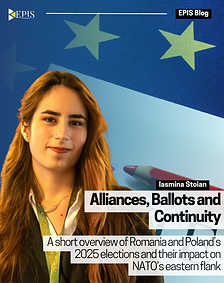
Alliances, Ballots and Continuity
A short overview of Romania and Poland’s 2025 elections and their impact on NATO’s eastern flank
The 2025 presidential elections in Romania and Poland marked a pivotal moment for NATO’s eastern flank and also the start of a new chapter.Romania’s pro-European outcome contrasts with Poland’s conservative shift, raising questions about regional cohesion. Thus, the future of NATO’s unity and its support for Ukraine now hinges on how both allies align with the alliance’s evolving priorities.

Digital Colonization
Should China’s Digital Silk Road be seen as a Threat or a Lifeline?
1. Is China’s Digital Silk Road (DSR) a threat to national sovereignty or a lifeline for digital development? 2.The DSR initiative has two sides: it gives developing nations an opportunity for digital empowerment but also fosters long-term strategic dependencies 3.The Digital Silk Road is neither a trap nor a gift, but a two-edged sword that brings both empowerment and dependency. Policymakers should ensure that these collaborations support development without compromising sovereignty.

The Australia–Nauru Security Treaty
Strategic Opportunity or Sovereignty Risk?
Main Question:
Does the Australia–Nauru treaty help counter China’s Pacific influence, or risk harming Nauru’s sovereignty?
Main Argument:
The treaty boosts Australia’s strategic stance by limiting China’s access, reassuring allies, and asserting regional leadership. But it risks neo-colonial perceptions, deepens dependence, and ignores key Pacific concerns like climate change.
Conclusion:
To succeed, Australia must prioritize partnership, climate action, and respect for sovereignty.

AI as the space race of the 21st century
The Danger of AI-driven Disinformation Campaigns for Foreign and Security Policy
- Does AI pose a threat to security and foreign policy due to the possibility of disinformation campaigns against the backdrop of technological advantages other nations?
- The targeted dissemination of false information can influence the sentiment of the respective population or politicians themselves and can be part of hybrid warfare.
- It is therefore important not only to possess the sword, but also the shield. The shield must be a strong AI strategy for the EU in the context of defense.

Rising Threats on NATO’s Eastern Border
Growing Threat of Provocations in the Baltic States
Main question: How are rising Russian provocations threatening NATO’s eastern border?
Argument: Since 2022, Russia (often with Belarus) has carried out drones, missiles, sabotage, and hybrid attacks in the Baltics, Romania, and Poland, escalating regional tensions and testing NATO’s defenses.
Conclusion: Russia’s actions aim to intimidate neighboring countries; NATO must strengthen deterrence and coordination to prevent further destabilization.

Why did Moscow Recognise Afghanistan's Taliban?
Counter ISIS-K, energy transit, labour needs, and regional reactions to Russia's move.
Why did Russia recognize the Taliban on 4 Jul 2025 despite post‑2021 isolation, and what follows? Shared fight vs ISIS‑K; labour gaps; energy & transit deals; Soviet legacy ties. Pragmatism beats isolation—if China, Iran and others move closer. Shared values, rights and norms fade and the Liberal international order weakens.

The Role of Uganda in Eastern Congo
Self-Defence or Interference?
The conflict in the Democratic Republic of Congo (DRC) has persisted for nearly three decades, involving numerous external actors, including Uganda. Uganda’s significant engagement began during this period. Uganda’s involvement remains controversial, raising persistent concerns regarding issues of sovereignty, economic exploitation, and human rights violations. Congo’s fragility and systemic corruption have rendered it vulnerable to external exploitation.

The New Iron Curtain is Digital
How Russia Weaponized TikTok in Romania and DDoS Attacks in Estonia
(1) How are Estonia and Romania countering Russian digital threats, and what lessons emerge from their responses? (2) Estonia built strong cyber defenses after past attacks; Romania faced election interference via TikTok and disinformation. (3) To protect democracy, the EU must boost cybersecurity, enforce strict protocols, and raise public awareness.

Russia and Japan the Archipelago of Discord?
The Ongoing Dispute on the Kuril Islands Between Tokyo and Moscow
Will the conflict between Japan and Russia over the Kurils resolved? The historic context, the presence of resources and the confrontation between Putin and Japanese ambitions halted the possible resolution. The ongoing conflict is very unlikely to be resolved as the situation stays the same.

The Role of Foreign Powers in Lebanon’s Security Landscape
External influence in Lebanon's fragile internal security environment
How do foreign powers shape Lebanon's security landscape? From Iran's military entrenchment to Western and Gulf states' strategic maneuvers, foreign actors have long influenced the country's fragile equilibrium. As regional dynamics shift, Lebanon’s trajectory remains uncertain. Without a unified international strategy and a commitment to long-term stability, Lebanon risks remaining a proxy battleground for geopolitical competition rather than advancing toward genuine sovereignty and security.

Pope Francis – The Diplomat of God
How a Pontiff Challenged Global Politics
Can a spiritual leader influence global politics without traditional power? Pope Francis used moral authority and symbolic gestures to impact diplomacy, placing peace and the vulnerable at the centre of global discourse. His papacy proved that ethical leadership can challenge realpolitik and leave a lasting legacy on the international order.
Turning Chaos into Opportunity
Europe’s Path to Strategic Autonomy
The chaos generated by the Trump administration brings challenges, but also the opportunity for Europe to build its strategic autonomy, improving its position in security, trade, and technology.
In Search of a New World Order
2025 Munich Security Conference Report — The Call for Global Depolarization in a Multipolar World
How can governments uphold democracy in a fragmented, multipolar world while avoiding authoritarianism? The greatest threat to Western democracies is internal—censorship and suppression of dissenting opinions erode trust and weaken democratic values. To safeguard democracy, leaders must either eliminate censorship or admit democracy no longer exists in its purest form. The choice is between civil liberties and authoritarian control.
Balancing Act
The EU’s Strategic Partnership with Taiwan in the Shadow of Global Tensions
Should the EU treat Taiwan as a strategic partner despite China’s threats? Taiwan offers the EU critical economic and democratic alignment, but deepening ties risks economic retaliation and geopolitical friction with Beijing. The EU must cautiously strengthen ties with Taiwan to support democracy and resilience, while avoiding escalation with China.
17ᵗʰ Kyiv Security Forum
Kyiv Hosts Global Support. Putin Hosts a Parade of Tyrants.
1. Ukraine has become a fast, self-reliant defense innovator, urging frozen Russian assets to fund its tech sector. 2. With U.S. security guarantees less certain, Europe must back Ukraine directly—not just in solidarity, but because it now serves as the continent’s key bulwark against aggression. 3. A “Reverse Kissinger” approach to Russia won’t work; lasting security depends on strong democratic alliances, not deals with autocrats.
Lee Jae Myung - Changing Northeast Asian Security?
Why South Korea’s 2025 Presidential Election Could Reshape Northeast Asian Security
Main Question: Could South Korea’s 2025 election reshape the security landscape of Northeast Asia? Argument: A victory for Lee Jae-myung would likely shift South Korea’s foreign policy away from its U.S.-Japan alliance toward closer ties with China and North Korea. Conclusion: Such a pivot could fracture existing alliances and accelerate instability across the region.
Can Europeans Take on the Defence of Europe?
Assessing Europe’s readiness to assume responsibility for its own security
1. Can Europeans take on the defense of Europe? 2. the reasons of Europe's dependence on NATO 3. this alliance is vital for Europe
New Chinese Stealth Jet J-36
– Pacific Power Shift or Paper Tiger?
With the grey silhouette of the new Chinese J-36 stealth fighter appearing in the sky, analysts wonder if the West has fallen behind in the race for the 6th Gen of fighter aviation. But with CCP military projects shrouded in secrecy and propaganda, what do we know so far? The J-36 seems to be more than a paper tiger but rather a capable fighter, that might however not be the great leap forward it is presented as.


