

Anti-Secession Law (2005) is a PRC statute that formalises Beijing’s claim over Taiwan and legally authorises the use of force if Taiwan pursues formal independence, embedding coercion into law.
Introduction
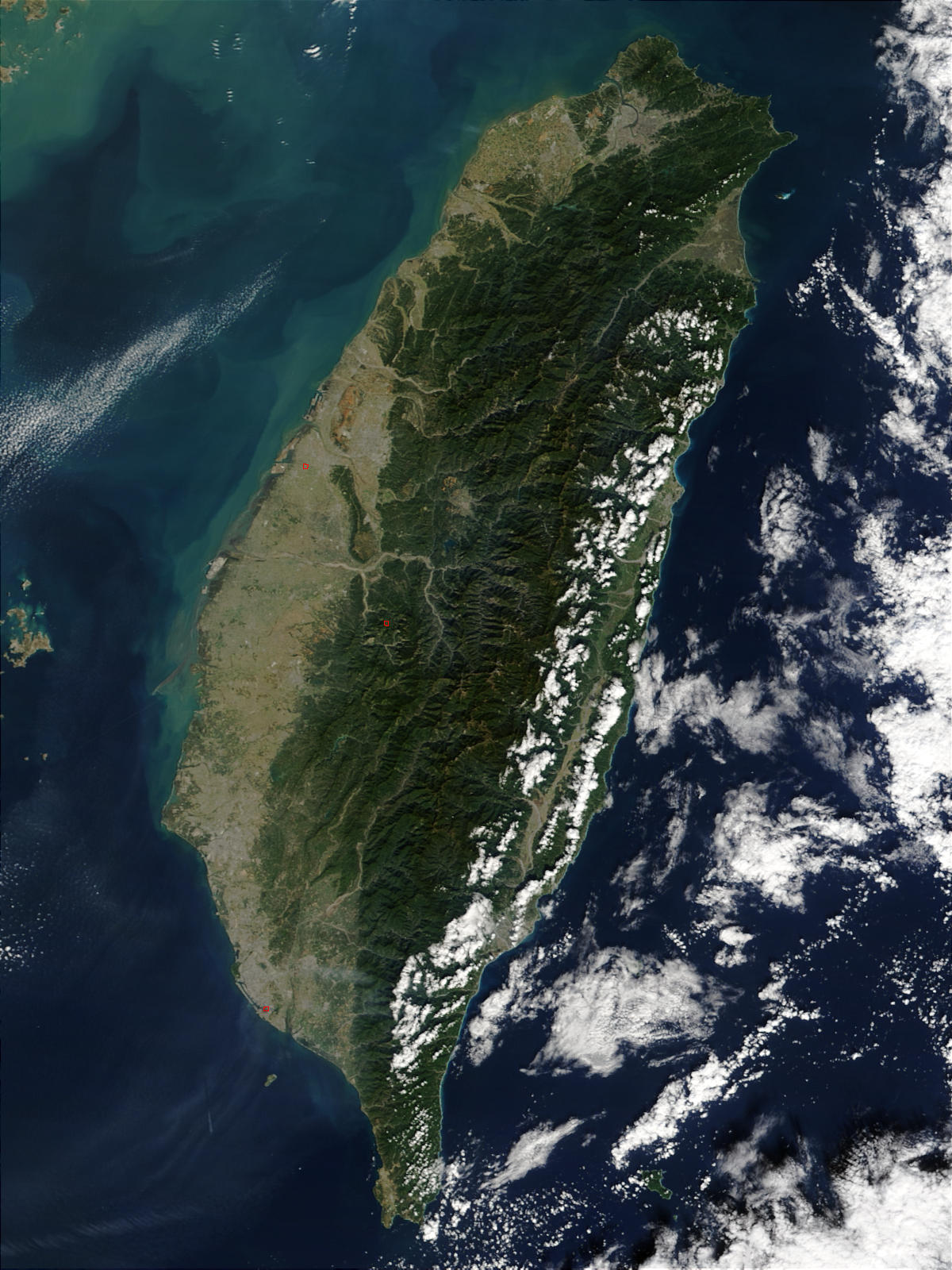
Taiwan has acted as a point of resistance and retreat throughout Chinese History. Modern historical issues of conflict in the Sino-Taiwanese Strait have heavily informed regional security over the past 100 years, serving as a leitmotif for diplomacy and cooperative decision-making across the Sinosphere, affecting all in its sphere of influence, not just China and Taiwan.
Recent events highlight the continued relevance of this pattern. As of the morning of the 29th December 2025, Beijing has conducted live-fire exercises in waters surrounding Taiwan, framed as a deterrent against separatist activity, shortly after the U.S. approved its largest arms transfer to Taipei to date, and Japan signalled its willingness to intervene should hostilities break out (Oliver Farry, 2025).
These developments are not isolated and are part of a series of escalations that demonstrate the unresolved status of the Strait extends its strategic consequences well beyond the immediate cross-Strait relationship, implicating neighbouring states and major powers alike (Stephen Quillen, 2025).
Taiwan before 1945
To give context for pre-20th century relations, following the cessation of hostilities between Qing and Ming forces in 1683, the island of Taiwan was incorporated into the Qing imperial administration, which ruled China at the time. This incorporation was effected under the command of Admiral Shi Lang, whose naval forces prevailed over the remnants of the Ming-loyalist Zheng regime, known retrospectively as the Kingdom of Tungning (National Palace Museum, 2021). Formal annexation procedures were concluded in the spring of 1684 (Chinese Embassy to the Phillipines, 2024).
For the next two centuries, the island’s administrative status was that of a prefecture under the jurisdiction of Fujian Province. This arrangement persisted until a significant reorganisation in 1887, which elevated Taiwan to the status of a separate province, albeit one retaining a formal linkage to Fujian in its designation as Fujian-Taiwan Province (Australiasian Strategic Policy Institute, 2025).
However, following the Treaty of Shimonoseki on April 17th 1895, the Taiwanese were under Japanese rule until 1945, when the Qing dynasty gave Japan the Fujian-Taiwan Province (Monash University, 2024). As an island, it possessed a heterogeneous ethnic population, with the majority of people being Han Chinese, as well as having 16 other officially recognised tribes (Minority Rights Group, n.d.). This was due to a large migration of Han Chinese people from the 17th century onwards. Several languages were spoken in the region, but the most common were Mandarin, Taiwanese, Hakka, and Formosan (Liraz Postan, 2023).
When Japan took over ruling, to help start on good terms, according to Article 5 of the Treaty of Shimonoseki, in the first two years of occupation, Taiwanese residents were allowed to choose their nationality, being given the option to stay under Japanese rule or emigrate to China (Treaty of Shimonoseki, 1895). This gave the Taiwanese some autonomy and say in the power transition, although many would have considered it to be a choice between the lesser of two evils.
Small points like this demonstrate the complicated relationship Taiwanese individuals may have had with China, even before 1945. The Chinese were an ever-present part of their lives, history, and language, and when China makes points regarding this, such claims are often dismissed as imperialistic rhetoric, and in many cases, rightly so; they nonetheless draw upon genuine historical and cultural continuities that shaped Taiwanese experiences well before 1945.
The following half-century of Japanese rule witnessed extensive programmes of modernisation and cultural assimilation, which fundamentally reshaped the island’s infrastructure, economy, and society. This period concluded abruptly with Imperial Japan’s surrender in August 1945, returning Taiwan to Chinese control and setting the stage for its entanglement in the impending civil conflict.
Chinese Civil War and the Birth of the Conflict
Japan’s invasion of Manchuria in 1931 fundamentally altered the political landscape within China, weakening the Nationalist government and reshaping the balance of internal power. Although Chiang Kai-shek continued to prioritise the suppression of Communist forces in the early 1930s, the external threat posed by Japanese expansion increasingly constrained his ability to do so (Harry S. Truman Library, n.d.). The outbreak of full-scale war with Japan in 1937 severely weakened the Nationalists, as Japanese forces occupied much of eastern China and inflicted widespread civilian casualties. Displaced from China’s economic centres and increasingly alienated from the population, the Nationalist regime struggled to maintain effective resistance. In contrast, Communist guerrilla warfare in rural areas enhanced the CCP’s legitimacy and popular support.
During the later stages of the war, the United States provided aid to the Nationalists while simultaneously attempting to prevent a Communist victory through mediation. Following Japan’s surrender in 1945, civil war quickly resumed, culminating in the establishment of the People’s Republic of China in 1949. The outcome fuelled enduring debates in the United States over responsibility, foreign intervention, and the limits of American influence abroad (Harry S. Truman Library, n.d).
Since the conclusion of the Chinese Civil War in 1949, Taiwan has occupied a contested position in East Asian politics. Following their defeat, the Nationalist government relocated to Taiwan, while the newly established People’s Republic of China asserted sovereignty over the island and maintained its intention to reintegrate it into the mainland. This objective was constrained by the involvement of the United States, whose deployment of the Seventh Fleet to the Taiwan Strait in 1950, amid the outbreak of the Korean War (Office of The Historian, n.d.), combined with sustained diplomatic and military backing under the 1954 Mutual Defence Treaty (Yale Law School, 1957), significantly reduced the likelihood of a direct military assault by Beijing. Without U.S. intervention, it is hard to know what state the conflict would be in today, and if it would still even be on our minds as a contemporary issue.
Insert EPIS Design of Appendix #1
Cold War Internationalisation of the Conflict
With China’s claimed right over the island being challenged and Taiwan’s sovereignty in danger, relations were tested repeatedly during the 1950s. In 1958, the People’s Republic of China initiated artillery attacks against the offshore islands of Jinmen and Matsu, capitalising in part on the temporary diversion of American attention during U.S. military operations in Lebanon (Britannica, 2024). The episode, commonly referred to as the Second Taiwan Strait Crisis, was ultimately defused when the United States supplied and reinforced Nationalist garrisons stationed on the islands, signalling Washington’s continued commitment to Taiwan’s security. While large-scale confrontation was avoided, hostilities did not fully subside. Instead, both sides engaged in a prolonged and highly ritualised exchange of artillery fire on alternating days, a practice that showed the persistent volatility of the Strait without triggering outright war. This low-intensity military standoff endured for more than two decades and only came to an end in 1979, following Jimmy Carter’s decision to normalise diplomatic relations with the People’s Republic of China, acknowledge one China policy, and sever normal ties with Taiwan (Council of Foreign Relations, 2025).
This episode also revealed the underlying logic of U.S. involvement in the Strait. American policy during the crisis was shaped by a dual objective of preserving the Chiang Kai-shek government in Taiwan while avoiding direct military confrontation with the PRC. Over time, however, U.S. policymakers, particularly within the Eisenhower administration, recognised that these aims rested on a strategic misreading of Beijing’s intentions (Gregory Kulacki, 2020). As long as a sustained U.S. military presence remained in the region, the PRC showed little inclination toward launching a full-scale invasion of Taiwan. The crisis thus reinforced a pattern in which American deterrence functioned less as a response to imminent attack than as a stabilising force that constrained escalation on both sides.
Diverging Political and Social Paths
The period between the second and third Taiwan Strait crises was characterised by a relative thaw in cross-Strait relations, marked by expanding economic and social exchanges despite the persistence of deep political mistrust. While the 1980s witnessed increased trade, investment, and limited people-to-people contact following the lifting of travel restrictions in 1987, these developments occurred alongside, rather than in place of, continuous strategic rivalry and unresolved questions of sovereignty (Peace Research Centre Prague, n.d.). These changes were driven less by reconciliation with Beijing than by domestic pressures for liberalisation and economic opportunity.
This fragile growth was disrupted in the mid-1990s with the outbreak of the Third Taiwan Strait Crisis. Tensions escalated in 1995 when the United States granted a visa to Taiwanese President Lee Teng-hui to Cornell University, an action Beijing interpreted as a violation of prior diplomatic understandings and a challenge to the “One China” principle (Britannica, 2024).
In response, the People’s Republic of China conducted a series of missile tests and military exercises in the waters surrounding Taiwanese ports, specifically Keelung and Kaohsiung, intended both to signal resolve and to deter perceived moves toward formal independence (Science Direct, 1999). The crisis culminated in 1996, as the United States deployed aircraft carrier battle groups to the region in a demonstration of deterrence and support for Taiwan’s first direct presidential election (John C. Cooper, 1996). Although open conflict was avoided, the episode showed the fragility of cross-Strait stability and revealed how quickly symbolic political actions could escalate into perceived major security confrontations.
Contemporary Developments and Escalation
Since the turn of the twenty-first century, cross-Strait relations have been shaped by the simultaneous deepening of economic interdependence and the intensification of strategic rivalry as China expands as a global political and economic power. Taiwan’s accession to the World Trade Organisation in 2002, alongside that of the People’s Republic of China, initially showed optimism that economic integration might temper political tensions (BBC, 2001). Trade, investment, and people-to-people exchanges expanded rapidly, creating dense networks of trade across the Strait. Yet this economic convergence did not translate into political reconciliation. Instead, it coincided with the consolidation of a distinct Taiwanese political identity, particularly following the island’s democratic consolidation in the early 2000s.
Beijing’s response has increasingly combined economic power with coercive signalling. The passage of the 2005 Anti-Secession Law codified the PRC’s willingness to use “non-peaceful means” should Taiwan pursue formal independence, institutionalising the threat of force as a central component of cross-Strait relations (Mainland Affairs Council, 2005). In the past decade, this posture has intensified through frequent military exercises, airspace incursions, and naval operations designed to normalise pressure and erode Taiwan’s strategic confidence.
Concurrently, the United States has expanded its role as a security guarantor, deepening arms sales, enhancing military coordination, and reaffirming commitments under the Taiwan Relations Act. This triangular dynamic has heightened the risk of miscalculation, as deterrence increasingly relies on tacit signalling rather than dialogue. The result is a precarious mixed balance in which stability is maintained through managed tension, an arrangement that remains inherently fragile in the face of shifting regional power balances.
Historical Interpretation and Debate
Scholarly interpretations of the Taiwan question meet along ideological and historical points. Some, like Odd Arne Westad (Odd Arne Westad, 2007), view the conflict as an unresolved civil war frozen by Cold War geopolitics; others, like Shelley Rigger (Wilson Centre, 2003), interpret it as a colonial legacy transformed by decolonisation and identity formation. From a realist perspective, Taiwan represents a strategic asset whose fate is determined by power balances rather than legal claims. Constructivist approaches, by contrast, emphasise the evolution of Taiwanese political identity as a decisive factor limiting prospects for reunification.
What remains clear is that historical narratives themselves have become instruments of policy. Competing interpretations of sovereignty and continuity guide contemporary diplomatic posturing. The endurance of these narratives explains why the Taiwan issue remains resistant to conventional conflict-resolution mechanisms and why it continues to generate instability disproportionate to the island’s geographic size.
Ultimately, the persistence of the Taiwan question reflects the structural durability of competing historical and political logics that resist reconciliation. Competing claims to sovereignty are sustained not merely through material power, but through deeply embedded narratives that shape how legitimacy and authority are understood by each actor involved. Beijing’s emphasis on historical reunification, Washington’s strategic ambiguity, and Taipei’s evolving democratic self-conception operate within distinct epistemic frameworks that are not easily reconciled through negotiation alone. As a result, the Taiwan issue endures not because of diplomatic indecision, but because it occupies a space in which resolution would require a fundamental reordering of regional power relations and political identities. Until such a transformation occurs, the question of Taiwan is likely to remain suspended between contestation and containment, emblematic of the broader tensions that define the contemporary international order.
Future Resolutions
For a foreseeable resolution to exist, a global governance of sorts needs to be in place to regulate not only the contemporary challenges these nations face with one another, but the longstanding, complex, almost mythic history the island’s status holds within Mainland China’s legacy and culture.
When power is split between could-be hegemonic powers, given time and resources, inherently, they will seek the means to protect their own posterity and sovereignty. China is one global leader in the current bilateral global power structure that is contesting US primacy; they have no reason to cede their claims on Taiwan, given that the only other major power that will and could counterweight this proportionally is the USA. Even then, US interest in Taiwan is nowhere near as great as that of China’s, and the extent to which they would go to protect the state’s sovereignty could be debated.
Nevertheless, recent developments indicate a deepening U.S. commitment to the region: under the 2023 National Defense Authorization Act, U.S. Army Special Forces have been deployed to Taiwanese amphibious command centres in Kinmen and Penghu, marking the first enduring American military presence on the island in more than four decades (Guy D. McCardle, 2025). This shift suggests that U.S. strategic engagement in the Taiwan Strait is no longer merely declaratory, but increasingly operational.
This dynamic is further complicated by the fact that China is one of the US’s largest global trading partners (The Yale Review of International Studies, 2025). Meaning there is not much room for reactionary or immediate political decision-making. However, as we saw in the 1950s, Eisenhower’s presence within the region made a huge difference in Chinese willingness to attack, showing that, at least historically, US regional involvement can have an impact on diplomacy. Whether that remains to this day is up for debate.
Without a unilateral global governing power, only a certain extent of said global governance can exist in the 21st century, and because of that, we only see partial elements of it today. With heavily regional organisations like the UN and ASEAN, and ineffective international organisations like NATO, a truly amicable resolution to this conflict is not foreseeable without the cessation of either China or Taiwan. That being said, recent action in Venezuela under Trump’s administration may be a point of validation for the Chinese government to act against Taiwan.
Conclusion
With both claiming historical entitlement and authority to the region, the important question of resolution depends on the Chinese willingness to resign from its encroachments, the possibility of external intervention, and Taiwan’s preparedness to submit to Chinese authority. Two of which seem unlikely given the resignation seen from both states thus far and historically.
The continued growth of China’s global power suggests that any meaningful concession on Taiwan is increasingly unlikely, particularly as Beijing perceives reunification not merely as a strategic objective, but as a question of historical legitimacy and regime credibility. As China’s economic and military capabilities expand, so too does its capacity to challenge the existing balance of power in East Asia, reducing the incentives for compromise while raising the costs of inaction for external actors. At the same time, Taiwan’s deepening democratic identity and growing international visibility further entrench positions on both sides, narrowing the space for diplomatic manoeuvre. In this context, the persistence of the Taiwan issue reflects the structural reality of a multipolar world in which competing visions of order, sovereignty, and legitimacy collide without a clear mechanism for resolution.
Bibliography
Appendix #1