LATEST NEWS

EPIS Format Groups
EPIS Basics
Basic information on international foreign and security policy
Every week, we present basic information on international foreign and security policy in short knowledge articles. The short explanations focus on key personalities, theories and organisations. This gives you a quick overview.
Publications
Regimes
Regimes can take the form of official treaties or emerge as traditions or taboos. Organisations may or may not be involved in regimes.
Personality
Personalities are key figures in political history whose leadership or ideas have shaped governance and politics. Their influence continues to have an impact on political thinking and world affairs.
Theory
Theories provide a framework for understanding power, governance and political behaviour. They help to explain ideologies, systems and decision-making processes that shape national and international politics.

/ˈbælᵊns ɒv θrɛt ˈθɪəri/
The Balance of Threat Theory asserts that states form alliances based on the threat they perceive from other states. It contends that states evaluate potential threats not only regarding power but also consider the level of aggression, the capabilities, and the intentions of other states. This theory highlights the importance of assessing threats and suggests that states align against those perceived as the greatest threats rather than just the most powerful entities.
/ˈbælᵊnsɪŋ ænd ˈbændˌwæɡənɪŋ/
Balancing and bandwagoning are two strategies that states employ in response shifts in the balance of power. Balancing refers to the tendency of weaker states to form alliances to counterbalance against a stronger power in order to maintain a stable power equilibrium. On the other hand, bandwagoning involves weaker states aligning with a dominant power, often in the hope of benefiting from its protection. Balancing is derived from the desire to avoid loss, whereas bandwagoning states seek for an opportunity to gain benefits.

Chinese Debt Trap?!
Launched in 2013, the Belt and Road Initiative is central to Xi Jinping's foreign policy. Under the Belt and Road Initiative, China provides loans to countries to develop infrastructure. These infrastructure projects combine into a network of five land corridors and a maritime Silk Road. China portrays the Belt and Road initiative as a win-win situation, furthering trade and helping hitherto underdeveloped countries. However, critics warn that countries may not be able to pay back loans, becoming dependent on China.

"No more wars, no more bloodshed. Peace unto you. Shalom, salaam, forever." (Menachem Begin)
After twelve days of secret negotiations at Camp David, Israel and Egypt signed the Camp David Accords on September 17th 1978. The accords consisted of two agreements. The first agreement saught to establish an autonomous authority in the West Bank and the Gaza Strip. The second built the basis for Israel to cede the Sinai Peninsula against peace guarantees and diplomatic recognition by Egypt.

"Secrecy is the first essential in state affairs."
During the 30 Years War, Catholic France pursued alliances with the Protestant Dutch Republic and Sweden. Richelieu, himself a Catholic cardinal, arranged these alliances to balance against the Habsburg Empire. In doing so, Richelieu championed "raison d'etat", detaching the state from religious ideologies and providing it with its own interests. In strengthening the "raison d'etat", Richelieu increased the power and freedom of the ruler, facilitating absolutism.

/ˈsɛn.tər əv ˈɡræ.vɪ.ti/
Besides his famous trinities describing the nature of war, Clausewitz introduced the concept of the "centre of gravity." Initially referring to the point where the enemy's forces were concentrated, Clausewitz later revised the concept. In its later iteration, "centre of gravity" refers to the source of the enemy's power, that being its population and morale.
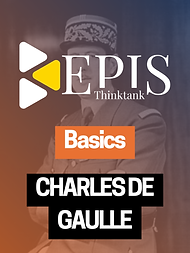
"France cannot be france without greatness." - Charles De Gaulle
Charles de Gaulle, often known as the General, was a prominent French military leader and statesman. As a president of France, he pursued a policy of “national independence” asserting French sovereignty and opposing both American and Soviet dominance during the Cold War. This led him to withdraw France from NATO's integrated military command and to develop own nuclear capabilities that made France the world’s fourth nuclear power. De Gaulle's approach emphasised national pride and an assertive stance in international affairs, shaping France's role on the world stage.

/ˈklɔːzəvɪts ˈtrɪnɪtiz/
The Prussian general and military strategist Carl von Clausewitz described war as a trinity of passion, chance, and reason. Passion resembles intrinsic hatred and is often associated with the population. Reason is likely attributed to the government. Clausewitz affiliated chance with the military.

"The Congress of Vienna does not run, it dances." (Charles-Joseph, 7th Prince of Ligne)
After the Napoleonic Wars, European powers convened at the Congress of Vienna to reorder Europe. Lasting from 1814 to 1815, the Congress was renowned for its lavish banquets, balls, and intricate negotiations. The Congress sought to reestablish monarchies to increase the legitimacy between states and limit the scope of future conflicts. Moreover, a stable balance of power was deemed essential for securing peace. For this purpose, defeated France was included in negotiations.

/kənˈstrʌktɪvɪzᵊm/
Constructivism focuses on the role of ideas, norms, and identities in shaping global politics. It contends that international outcomes are influenced by not only material factors but also non-material factors such as socially constructed perceptions and conventions. Constructivism highlights the importance of shared beliefs, cultural practices, and historical contexts in shaping state behavior. It argues that their behaviors are not fixed but can adapt and change based on evolving social norms and identities.

/ˈkaʊntərfɔrs ənd ˈkaʊntərˌvælju/
Counterforce describes the ability to conduct nuclear strikes against militarily relevant targets such as army bases. Counterforce strikes depend on smaller, tactical nuclear weapons. Countervalue describes nuclear attacks against non-military targets such as cities. In doing so, larger strategic nuclear weapons are utilised.

/ˌdɛməˈkrætɪk piːs ˈθɪəri/
The Democratic Peace Theory argues that democracies are reluctant to engage in armed conflict with other democracies. This theory proposes that shared democratic norms lead to higher level of peaceful relations among democratic countries. It is based on the notion that democracies are accountable to their citizens, and citizens generally prefer peace over conflicts. However, critics argue that other factors such as economic ties also play a role in influencing interstate relations since democracies are not completely immune to conflict.

Chinese reformist leader, modernized China's economy and diplomacy with "Deng Xiaoping Theory."
Deng Xiaoping's transformative leadership reshaped China's global presence. As part of his Reform and Opening-up diplomacy, he sought foreign investment and partnerships, opening the nation to international trade and driving China's rapid economic growth. Deng also proposed the 'One Country, Two Systems' approach for the governance of Hong Kong. Deng's shift to economic pragmatism reshaped global perceptions of China, fostering its rise as a major international player.

"We are not retreating, we are advancing in a different direction."
A general in the First and Second World War, McArthur became supreme commander of the Allied Forces in Japan. In the latter function, McArthur oversaw postwar socio-political reforms in Japan and the creation of the International Military Tribunal for the Far East. McArthur later led the United Nations Command in the Korean War. After publicly criticising the Truman administration and advocating for an escalation of the war, McArthur was relieved of his command in 1951. His removal remains a contentious topic in civil-military relations.

/ˈɪŋɡlɪʃ skuːl ˈθɪəri/
The English School Theory of International Relations aims to reconcile Realism and Idealism, emphasizing power and sovereignty alongside norms and institutions' impact on global outcomes. It highlights the evolution of an international society based on common values, rules, and shared interests, fostering cooperation while acknowledging the enduring significance of state power.

/ɪnˌvaɪrᵊnˈmɛntᵊl sɪˈkjʊərəti/
Environmental Security contends that environmental issues are vital to global stability and national security. This concept emphasises the interconnection between ecological issues and traditional security concerns. This perspective first and foremost highlights potential conflicts over environmental resources or the displacement of populations due to environmental factors. It asserts the need for international cooperation to address shared environmental threats, promoting both ecological sustainability and geopolitical stability.

European unity for economic integration and political cooperation
The European Union (EU) is a political and economic union of 27 nations that are primarily located in Europe. Starting off as the European Coal and Steel community, it has evolved into a broader union with shared citizenship beginning with the signing in Maastricht Treaty in 1992. The EU’s key objectives include creating a single market with free movement of goods, services, people, and capital as well as fostering common foreign and security policies.

Intelligence alliance consisting of English-speaking countries which share information for mutual security interests
FIVE EYES is an intelligence alliance comprising the English-speaking countries: the US, the UK, Canada, Australia, and New Zealand. These nations collaborate on signals intelligence gathering and sharing. The alliance aims to enhance security and intelligence capabilities through information exchange. FIVE EYES members commit to joint efforts in monitoring global communications and sharing valuable intelligence, emphasizing close cooperation and mutual trust in addressing international security challenges.
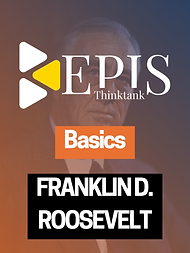
The motto of war is: "Let the strong survive; let the weak die." The motto of peace is: "Let the strong help the weak to survive." - FDR
Franklin D. Roosevelt, the 32nd President of the US, played a pivotal role in shaping the post-World War II international order. He sought to prevent future global conflicts by fostering diplomatic cooperation among nations. He worked with the other Allied leaders to lay the groundwork for the UN, promoting that it becomes a forum for peaceful negotiation and conflict resolution. Roosevelt's vision emphasised collective security and self-determination, guiding the world toward a more collaborative and rule-based international system.

"A king is the first servant and first magistrate of the state".
As Prussian King, Frederick the Great waged wars against Habsburg, France, and Russia, establishing Prussia as a major European power. Besides military accomplishments, Frederick the Great is often regarded as a representative of enlightened absolutism. Although concentrating power, Frederick believed the ruler ought to rule for the benefit of the people. Following this narrative, Frederick abolished torture and introduced the potato to alleviate food insecurity.

/frɪkʃən ənd fɔɡ əv wɔr/
"Everything in war is simple, but the simplest thing is difficult." This quote by Clausewitz encapsulates the meaning of "friction". The concept refers to minor problems in implementing a battle plan. These issues accumulate, constituting the difference between a plan and its implementation. Related to friction is the problem regarding uncertainty of knowledge. Although Clausewitz himself never mentioned the term, this uncertainty has been referred to as the "fog of war".

"People do not want words, they want the sound of battle, the battle of destiny."
Nasser's presidency (1956-1970) established Egypt as a significant player in the Middle East and saw the rise of Nasserism. A variant of Arab Socialism tailored to Nasser, Nasserism advocated anti-colonialism, socialist policies, and the unity of Arab nations. Nasserism won popularity throughout the Arab world when Egypt nationalised the British-held Suez Canal in 1956. Nasserism further found manifestation when Egypt and Syria merged to found the United Arab Republic (1958-1961).

/ɡeɪm ˈθɪəri/
Game Theory is a framework for analysing strategic interactions between states where outcomes depend on the choices of all actors involved. States aim to maximize their own gains while considering the potential actions of other states. This approach helps understand how states might cooperate, compete, or engage in conflict, based on their assumptions of each other's actions. Game Theory provides insights to negotiation dynamics, arms races, and various other international scenarios.

/dʒiːəʊpəˈlɪtɪks/
Contrary to popular belief, geopolitics is not a synonym for foreign policy. Geopolitics comes in two strands. First, critical geopolitics scrutinises how rulers portray geographical space to mobilise support and achieve ends. Second, classical geopolitics investigates how geography and technology interact and influence international relations. The interaction between technology and geography distinguishes classical geopolitics from geodeterminism. The latter argues that state behaviour is predetermined by geography alone.

"Heroism is endurance for one moment more."
In 1946, writing from Moscow, Kennan sent the "long telegram" to Washington, D.C. The telegram interpreted the Soviet Union's foreign policy as expansionist and rooted in a traditional Russian sense of insecurity and the need to oppress its population. The long telegram influenced the belief that the Soviet Union's foreign policy was not driven by rational grievances. Consequently, no concessions, but only a strategy of containment could guide the US' foreign policy towards the Soviet Union.
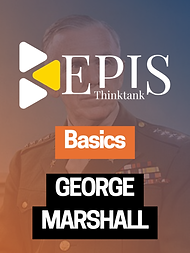
"Military power wins battles, but spiritual power wins wars."
A World War 2 general, Marshall became secretary of state in 1947 under President Harry Truman. Marshall is often brought in connection with the Marshall Plan. Although Marshall supported US economic aid to Europe, Marshall did not author the Marshall Plan. Instead, he lent his prestige and reputation as a former general to promoting the program. In 1950, Marshall became Secretary of Defense and was awarded the Nobel Peace Prize for his role in the Marshall Plan.

/ˈɡʌvərnməntəl ˈpɑlɪtɪks ˈmɒdəl/
The governmental politics model posits that separation of power does not lead to a division of power. Rather, multiple actors with different agendas have to share power. This means that contrary to the rational actor model, states are not unitary actors. Rather, the governmental politics model believes that the action of states is the result of the bargaining process between players with different agendas.

Renowned political theorist, shaped realist approach to international relations.
Hans Morgenthau was a prominent 20th-century political theorist. His work, particularly the book "Politics Among Nations," laid the foundation for realism in international relations theory. Morgenthau emphasized the importance of power, national interests, and state behavior in global politics. He contended that states pursued their interests in a competitive world, and his ideas continue to shape the understanding of international relations driven by self-interest and power dynamics.

/ˈhɛʤɪŋ/
Hedging, a relatively new concept, refers to a strategic approach where states simultaneously pursue multiple policies to manage uncertainty and to adapt to changing geopolitical dynamics. This involves both maintaining a flexible stance and hedging against potential risks. This strategy aims to have a balance between safeguarding security and maximising advantageous opportunities in an unpredictable international environment.

/ˌhiːɡɪˈmɒnɪk stəˈbɪləti ˈθɪəri/
The Hegemonic Stability Theory suggests that the international system is more likely to be stable in unipolar system where there is single dominant power, or hegemon. As this hegemon provides public goods such as a stable currency and security guarantees, it reduces uncertainty among states and maintains the international order. This theory also indicates that shifts in hegemonic power can lead to instability and conflict as new powers seek for control and the established order will be disrupted.